
Plain English guide

Three federal rules, one wellness visit.

How a contracted registered nurse can complete your Medicare annual wellness visits by telephone, why Medicare pays your practice for them, and where every part of that sits in the regulations.

42 CFR 410.1542 CFR 410.26Virtual supervision, permanent in 2026

What this visit actually is

A conversation, not an examination.

Medicare pays for a yearly check-in with every patient who has Part B, called the annual wellness visit. It is not a physical, there is no examination, and the patient owes nothing for it. It is a conversation: health history, medications, risk factors like falls or low mood, and a written plan for the screenings and preventive care that should happen over the next several years.

Medicare pays the practice for that conversation using one code for a patient's first ever visit and a second code for every year after it. The money is not in dispute and never has been. What practices ask us about is the arrangement: a nurse we do not employ, on a telephone, while our physician is somewhere else. That is the part this page is for.

The short version is that it rests on three rules that were already on the books, and it is written out below in the order they apply.

The chain

Each link is an existing federal rule.

Read left to right. The first rule says a nurse may do the visit. The second says that nurse need not be on your payroll. The third says the supervising physician need not be in the room. Nothing here is a workaround, and nothing here is novel.

Who bills, who pays whom

TULQ never touches a Medicare claim.

This is the question a compliance officer asks first, so it gets answered before anything else on this page.

What TULQ never does

We never bill Medicare. No claim is submitted by us, on your behalf or otherwise, and TULQ does not appear on the claim you submit.

We are not paid by Medicare. No part of our fee comes out of a federal programme directly, and we do not take a percentage of what you collect.

We do not hold your credentials. No TULQ login exists in your medical record system unless you choose to create one.

What your practice does

You bill Medicare under your own supervising physician, exactly as you would if the visit had been performed by someone on your own staff. Only the supervising practitioner may bill an incident-to service, and that is you.

You pay TULQ a flat fee for each completed visit, as an ordinary commercial expense, in the same shape as a staffing agency or a billing service.

You keep the record and the relationship. The signed note lives in your system, filed by your people.

From a phone call into the chart

Five steps, and none of them hand us a password.

This is the part people usually picture wrong. The finished note reaches the chart as a signed document, filed by your own staff, so there is no gap in who controls the record and no outside access to your software.

The front desk prints the chart summary.

Your practice

A short medication list and health history goes to the nurse before the call. Nobody at TULQ needs a login to produce it.

The nurse calls the patient.

TULQ

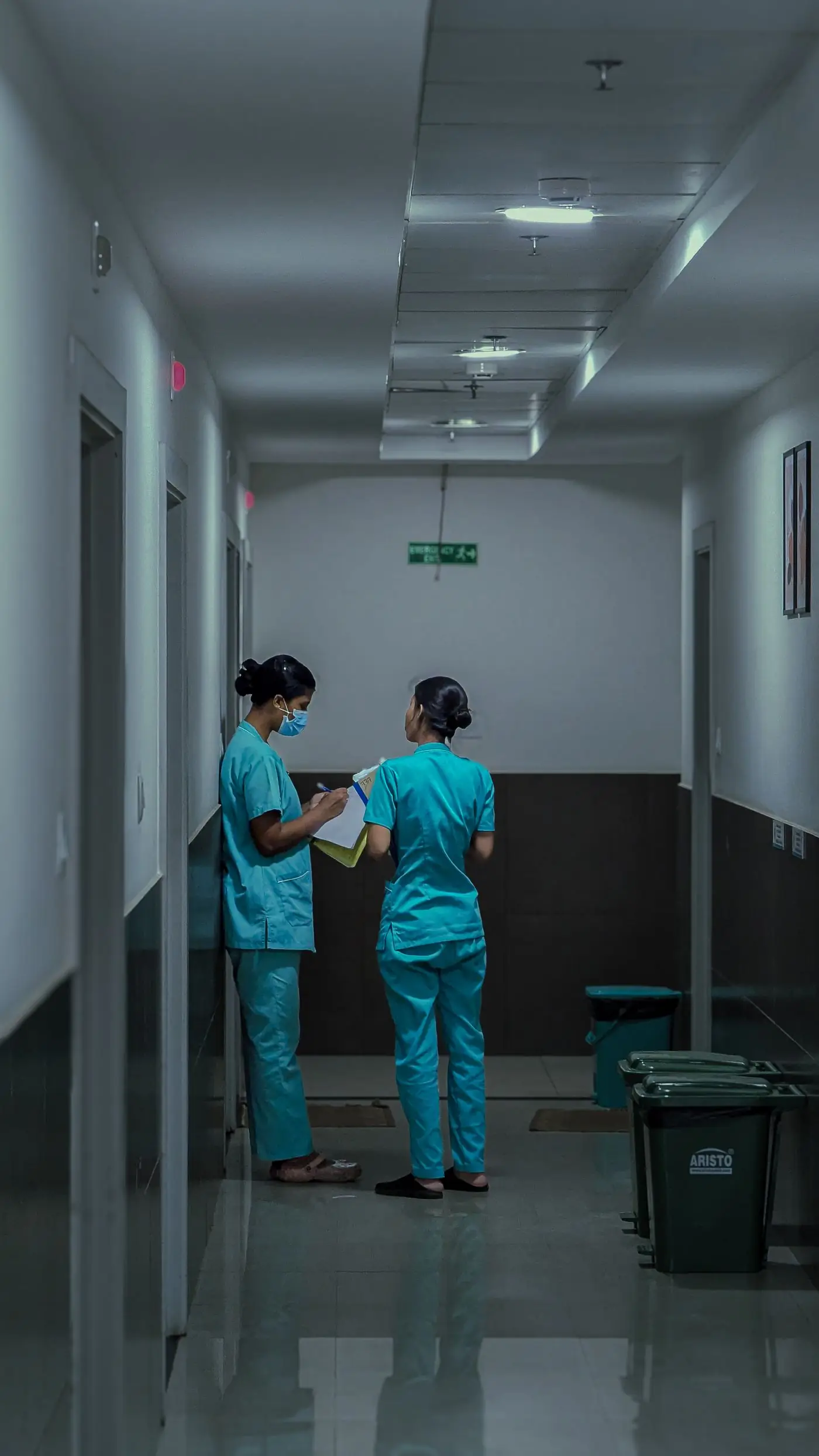
A licensed registered nurse conducts the wellness visit by telephone, covering every element the benefit requires, while the supervising physician is reachable on live video.

The nurse writes the note.

TULQ

The visit is documented in TULQ's own system and rendered as a finished document, complete and ready for a signature rather than a transcript for someone else to convert.

The document is delivered securely.

TULQ

It travels to the practice through an agreed private channel under a signed business associate agreement. It does not travel through anyone's inbox.

Your staff sign it and file it.

Your practice

The supervising physician reviews and signs, and your own people file it in your own medical record system. The chart is never touched by an outside hand.

Why it counts as a real visit

Every required element, evidenced.

A licensed nurse performing every required element under a physician's real-time supervision, with a signed record proving it, is what the benefit asks for. Shared rows are ones neither side owns alone.

What the visit has to cover

The elements the regulation requires before the visit is billable. Our nurses cover every one on every call.

  • 01Administer or review a health risk assessmentTULQ
  • 02Establish or update medical and family historyTULQ
  • 03List the current providers and suppliers involved in the patient's careTULQ
  • 04Record height, weight, body mass index and blood pressure
  • 05Detect any cognitive impairmentTULQ
  • 06Review risk factors for depressionTULQ
  • 07Review functional ability and level of safety, including fall riskTULQ
  • 08Establish a written screening schedule for the next five to ten yearsTULQ
  • 09Furnish personalised health advice and referralsTULQ
  • 10Review any current opioid prescriptions and screen for substance use disorderTULQ
What the record has to prove

A visit that happened but cannot be evidenced is the one that becomes a repayment two years later.

  • 11Each required element was actually covered, element by elementTULQ
  • 12Who performed the visit, and under what licenceTULQ
  • 13That the supervising physician was available throughout
  • 14The patient's eligibility, including that twelve months have passedTULQ
  • 15The physician's review and signatureYour practice
  • 16The note filed in the practice's own medical recordYour practice
  • 17The claim, submitted under the supervising physicianYour practice
The bottom line

No workaround, just the rules as written.

A federal rule lets a nurse do this visit instead of the physician. A second federal rule lets that nurse be supplied by an outside company rather than being an employee of the practice. A third lets the physician supervise by live video instead of standing in the room.

The practice bills Medicare as usual and pays TULQ separately for the nurse's time. The signed record ends up filed in the practice's own system by the practice's own staff. Every piece of that chain is built on an existing federal rule, not a workaround.

None of which is the same as saying it runs itself. The supervision obligation is real, the documentation standard is real, and both sit with your practice. What we are telling you is where they sit, not that they went away.

Common questions

What compliance officers ask us.

Can a registered nurse perform a Medicare annual wellness visit?

Yes. The regulation defining who may furnish the visit lists a physician, a qualified non-physician practitioner such as a physician assistant, nurse practitioner or clinical nurse specialist, and also a medical professional or a team of medical professionals working under the direct supervision of a physician. A registered nurse works under that third route.

What the nurse cannot do is make the supervision requirement or the billing obligation disappear. Both stay with your practice.

Source: 42 CFR 410.15
Does the nurse have to be employed by our practice?

No. The incident-to regulation defines auxiliary personnel as any individual acting under the supervision of the physician, regardless of whether that person is an employee, a leased employee, or an independent contractor of the physician or of the entity that contracts with them. That is the provision a staffing arrangement rests on, and it is the same one behind a locum nurse or a contracted phlebotomist.

Source: 42 CFR 410.26
Does the physician have to be in the building?

Not since 1 January 2026. Direct supervision still means the physician is immediately available to furnish assistance and direction throughout, but the presence required may now be a virtual one, through real-time audio and video interactive telecommunications. Audio-only does not satisfy it, and the allowance does not extend to services carrying a 010 or 090 global surgery indicator, which the wellness visit does not.

CMS adopted this permanently in the CY2026 Physician Fee Schedule final rule rather than extending it as a dated flexibility, which is what makes a standing telephone visit programme practical to run.

Source: 42 CFR 410.32(b)(3)(ii)
Who submits the claim to Medicare?

Your practice does, under your own supervising physician, exactly as if one of your own staff had performed the visit. TULQ never bills Medicare, never submits a claim, and never appears on one. Only the supervising physician or practitioner may bill for incident-to services, which the regulation states in as many words.

Source: 42 CFR 410.26(b)(5)
How is TULQ paid, then?

By the practice, as a flat fee for each completed visit. That is a private commercial transaction, separate from the Medicare claim, and it is the same shape as the arrangement a practice already has with a staffing agency or a billing service.

We do not take a percentage of what you collect. A revenue share is not unlawful and several vendors run one, but it is a different compliance posture, and a flat fee per completed visit is the one we would rather explain to your compliance officer.

Do your nurses need access to our EHR?

No, and by default they do not have it. Your front desk sends a short chart summary out, the nurse works from that, and a finished document comes back through a secure channel for your own staff to sign and file. No TULQ credential exists in your system unless you decide to create one.

Some practices prefer to grant delegated access so the note lands directly where the biller looks. That works too, under a signed business associate agreement. The point is that it is your choice rather than a condition of the service.

Can the visit really be done over the telephone?

For established patients, yes. The annual wellness visit sits on the Medicare telehealth list and audio-only delivery is permitted under the telehealth flexibilities, which the Consolidated Appropriations Act of 2026 extended through 31 December 2027. New patients generally still need to be seen in person.

Note that these two rules are separate and it is worth keeping them apart. The supervising physician's virtual presence is permanent. The patient-facing audio-only allowance is dated, so check the current CMS telehealth list rather than assuming the position holds.

Source: CMS Medicare telehealth
What stops this from being a documentation problem later?

The note has to show more than that a conversation happened. It has to evidence each required element, name who performed the visit and their credential, and record that the supervising physician was available throughout. Ours does all three on every visit, because a wellness visit programme that cannot prove the supervision is the one that becomes a repayment.

Source: CMS Medicare Wellness Visits, MLN6775421
Sources

Read the rules yourself.

Every claim on this page is linked to the primary document rather than to a summary of it. Nothing below is behind a paywall.

Sources

This page summarises federal requirements as they stood in August 2026 for a general audience. It is not legal, billing, or compliance advice and it does not substitute for review by qualified counsel or your own compliance officer. Coverage and supervision rules change, and the patient-facing audio-only telehealth allowance in particular carries a date, so confirm the current position with CMS and your MAC before relying on any of it.

Next step

Send this page to your compliance officer.

That is genuinely the fastest way to find out whether this works for you. If the answer comes back with questions, put us on the call. We would rather have the hard conversation before a contract than after a claim.

Founder · CEO · President
Michael Chavez Ross
michael@tulq.health
Clinical Director · RN, BSN
Jayson Forrest Minagawa
jayson@tulq.health
Compliance packet

Supervision model, sample completed note, and the business associate agreement we sign.

Ask and we will send it the same day, with the regulatory citations written out in full so your counsel can check them rather than take our word for it.

Get in touch